
Lights Flicker When the AC or Dryer Kicks On? Here's What It Means
September 17, 2026
This is paragraph text. Click it or hit the Manage Text button to change the font, color, size, format, and more. To set up site-wide paragraph and title styles, go to Site Theme.
Quick Answer: A brief, half-second dip in your lights when the air conditioner compressor or the dryer's heating cycle kicks on is almost always normal. Large motors and heating elements pull a heavy burst of current the instant they start, called inrush current, and that momentary draw pulls voltage away from everything else on the circuit for a fraction of a second. According to Eaton's Bussmann engineering documentation, a motor's starting current can spike to more than 20 times its normal running current for the first half cycle before settling to four to eight times normal for several seconds. The problem isn't the flicker itself, it's when the flicker lasts longer than a beat, spreads to lights nowhere near the AC or dryer circuit, or shows up alongside buzzing, warm outlets, or a burning smell. Any of those combinations means it's time to have a licensed electrician look at the panel and the connections behind it.
You're on the couch, the thermostat clicks, the outside unit hums to life, and for a heartbeat every lamp in the living room dims and comes back. Or it's laundry day, the dryer buzzer goes off and the machine kicks into its next cycle, and the kitchen lights sag for a moment before returning to normal. Most people notice it, shrug, and go back to what they were doing. It happens every time the AC or dryer starts, so it starts to feel like background noise rather than something worth a second thought.
That instinct isn't wrong, exactly. A quick dip tied to a specific appliance starting is one of the most common, most explainable things that happens in a home's electrical system. But "usually harmless" and "always harmless" are two different claims, and the difference between them comes down to details most homeowners have never been told to watch for.
What's Actually Happening When the Lights Dip
Every circuit in your home shares a limited supply of voltage from the panel. Under normal conditions, that supply is steady enough that a lamp, a television, and a refrigerator can all run at once without anyone noticing a change. Large motors and heating elements upset that balance for a moment because of how they start.
A central air conditioner's compressor is a motor, and motors need far more current to overcome the initial resistance of getting their internal components moving than they need once they're spinning at a steady speed. That initial surge, known as inrush current, is short but intense. Eaton's technical documentation on motor starting currents puts real numbers on it: during the very first half cycle, inrush current is often more than 20 times the motor's normal full-load current, then it settles to somewhere between four and eight times normal for the next several seconds while the motor gets up to speed. A clothes dryer works differently but produces a similar effect, since it combines a motor to turn the drum with a high-wattage heating element, both drawing on a dedicated 240-volt circuit that cycles on and off throughout a load.
That brief spike pulls voltage down elsewhere in the house. Just for an instant, the time it takes the motor to get moving. Incandescent and halogen bulbs show this most visibly because their brightness is directly tied to voltage, so even a small, momentary dip is visible to the eye. LED and CFL bulbs are less sensitive to small voltage changes but aren't immune, particularly on dimmer circuits.
Why Air Conditioners and Dryers Are the Usual Culprits
Not every appliance causes this. It takes a specific combination of high wattage and a motor or heating element that has to ramp up rather than switch on instantly.
Central Air Conditioning Compressors
The outdoor condenser unit's compressor is the single largest motor most homes run, and it cycles on and off dozens of times a day during peak summer months. Every cycle produces a fresh inrush spike.
Clothes Dryers
Electric dryers pull from a dedicated 240-volt circuit sized specifically for the combined draw of the drum motor and the heating element. The heating element cycles on and off throughout a drying cycle to hold a target temperature, and each time it does, it adds to the circuit's momentary demand.
Window And Portable Air Conditioning Units
These run on standard 120-volt circuits that are often shared with other outlets in the same room, so their compressor start-up draws from a circuit with less headroom than a dedicated central AC line.
Well Pumps, Air Compressors, And Shop Equipment
Homes with a well pump or a garage workshop see the same pattern from those motors, though it's less common in most Northwest Arkansas subdivisions than AC and dryer flicker.
When This Flicker Is Normal
A few characteristics separate an ordinary startup dip from something worth investigating.
It Lasts A Fraction Of A Second
If the lights dim and recover before you can really register what happened, that's the inrush current doing exactly what it's supposed to do.
It's Tied To A Specific, Predictable Moment
The flicker happens right when the AC cycles on or right when the dryer's heating element kicks in, not randomly throughout the day.
It Stays Close To The Source
Lights on the same circuit or nearby circuits dim slightly, while lights on the far side of the house or on a different floor stay unaffected.
Tip: If you want to confirm what you're seeing is a normal startup dip, watch a single lamp with an incandescent or halogen bulb the next time the AC or dryer kicks on. If it dims for under a second and comes right back with nothing else happening, that's consistent with ordinary inrush behavior. If you can't tell because every bulb in the house is an LED, borrow an old incandescent bulb for the test since LEDs mask small voltage dips that would otherwise be visible.
When It Signals a Real Problem
The National Electrical Code offers a useful benchmark here, even though it's written for electricians sizing wire rather than homeowners diagnosing flicker. NEC 210.19(A) includes an informational note recommending that branch circuit conductors be sized so voltage drop doesn't exceed 3 percent, with a combined limit of 5 percent when feeder and branch circuit drop are added together. Those percentages aren't enforceable requirements on their own, but they represent the range electricians treat as normal, healthy performance. When actual voltage sag runs well past that during an appliance start, something in the circuit is working harder than it should.
The flicker lasts longer than a beat
If the dimming stretches on for two, three, or more seconds instead of resolving almost instantly, the circuit or the connection feeding it may not be sized correctly for the load.
It spreads beyond the circuit in question
Lights throughout the entire house dimming when the AC or dryer starts, rather than just the fixtures nearby, often points to a loose connection at the electrical panel or even at the utility's service connection to the home, since that's a shared point every circuit in the house depends on.
It happens with sound or heat
Buzzing at an outlet or the panel, a burning or hot-plastic smell, or a switch plate that feels warm alongside the flicker are signs of a heat-generating connection problem, not a benign voltage dip.
It's getting more noticeable over time
A flicker that used to be barely visible and has become more pronounced over weeks or months usually means a connection somewhere is degrading further rather than staying stable.
Warning: A loose neutral connection, whether at the panel or at the utility's service point, can cause voltage across your home's circuits to swing unpredictably, sometimes dimming some lights while others run brighter than normal at the same time. This is a shock and fire hazard, not a cosmetic issue, and it is not something to diagnose or tighten yourself while the system is energized. If you notice mismatched flickering, where some lights dim while others in the house seem to brighten, treat it as urgent and have an electrician check the service connection rather than waiting to see if it settles down.
What an Electrician Actually Checks
A good electrician won't glance at the outdoor AC unit, shrug, and call it normal. Diagnosing appliance-triggered flicker means looking at more than just the appliance itself. A licensed electrician typically starts by confirming which circuits the flicker affects and whether it's isolated or spreads through the house, since that alone narrows down whether the issue lives at the appliance, the branch circuit, the panel, or the service entrance.
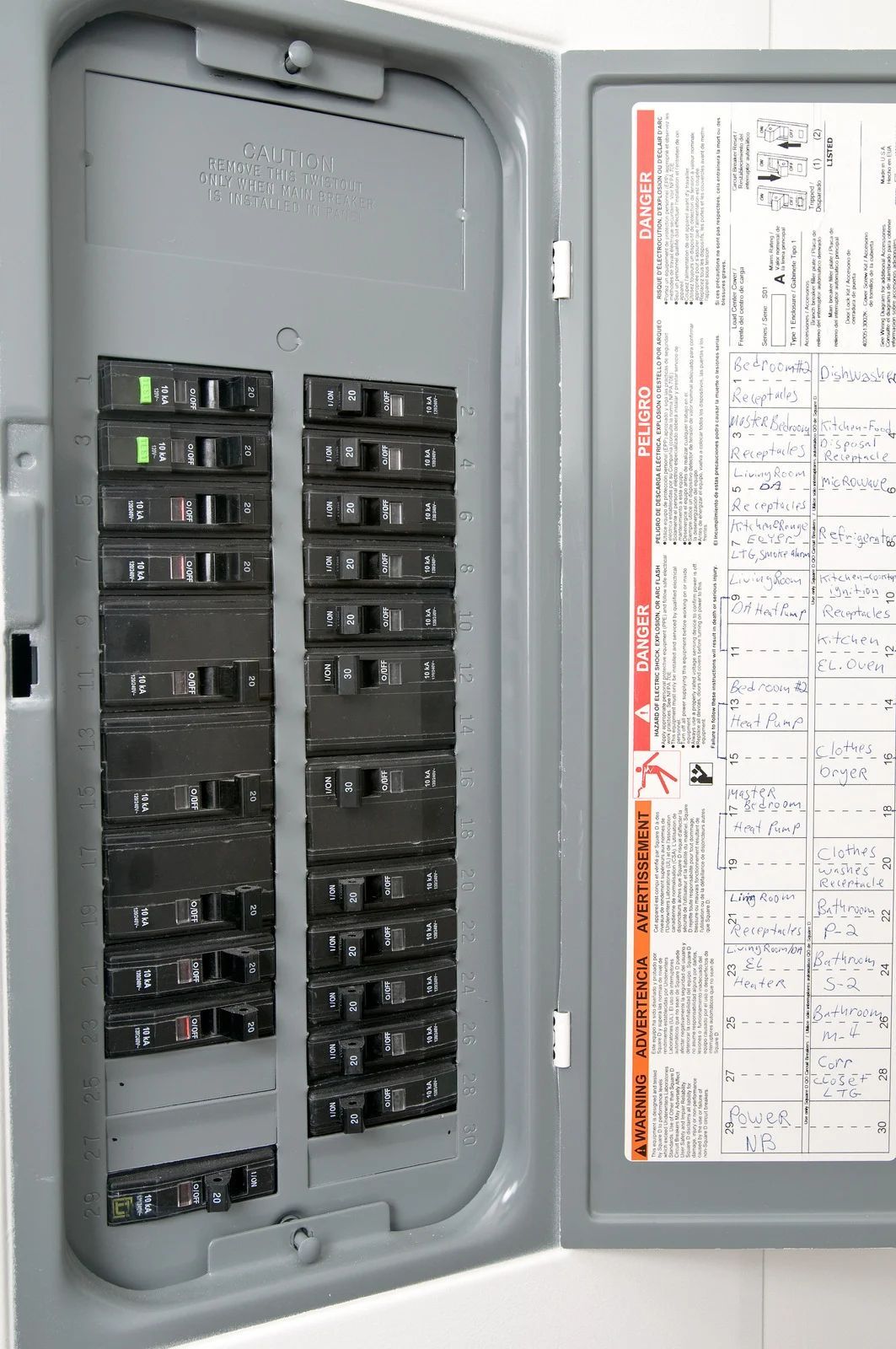
From there, the panel gets inspected for loose breaker connections, signs of heat damage, and whether the panel's overall capacity is adequate for the home's current appliance load. Wiring serving the AC and dryer circuits gets checked for correct sizing relative to the distance run and the load, since undersized conductors over a long run are a common contributor to voltage sag that shows up exactly the way appliance-triggered flicker does. If the flicker spreads across the whole house rather than staying local, the neutral connections at the panel and, when needed, the utility's service point become the focus, since a shared connection problem there explains widespread symptoms that a single bad breaker or outlet never would.
Why an Outlet Gets Hot in the First Place
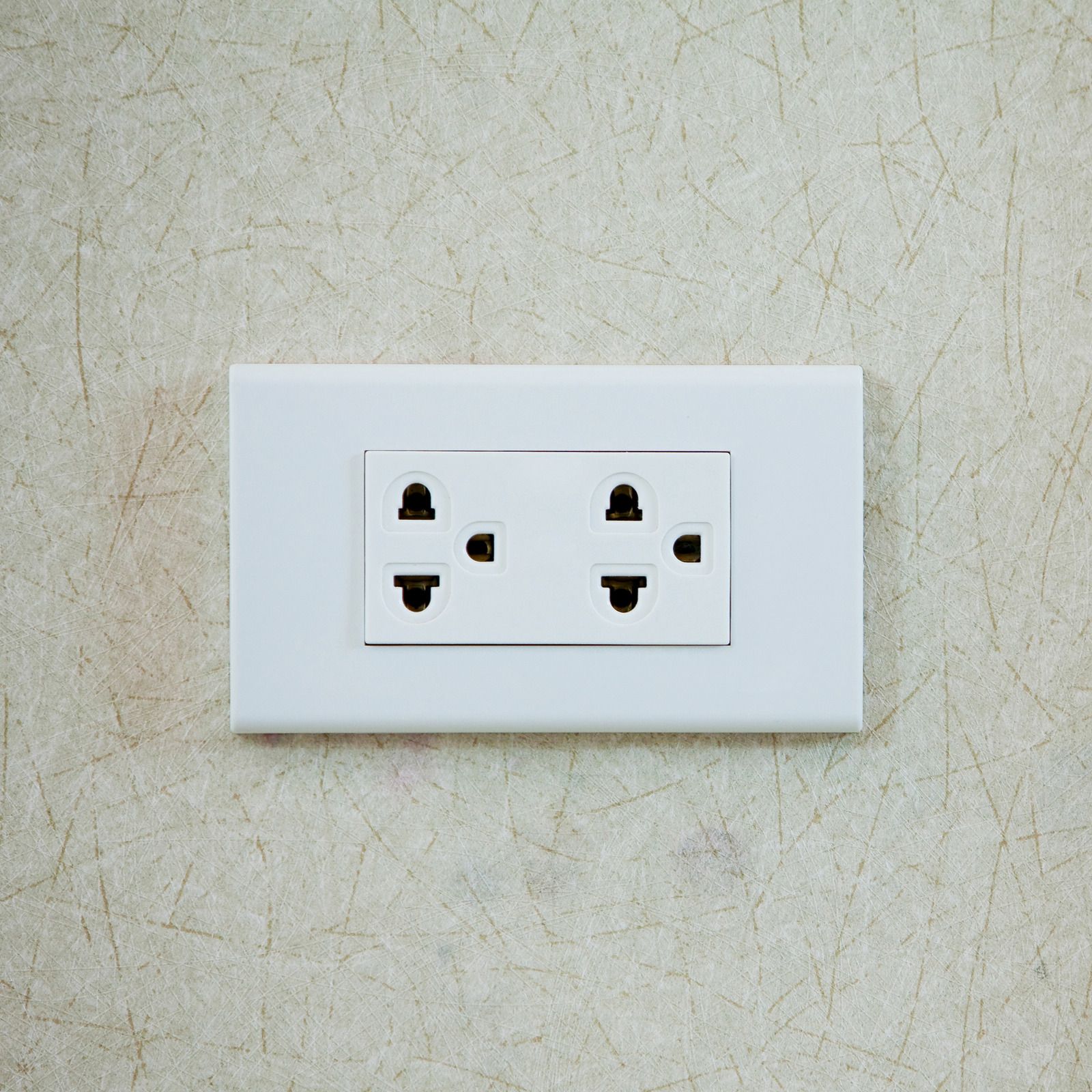
Electricity flows through your home's wiring with very little resistance when everything is connected the way it should be. Copper conductors, tight screw terminals, and properly sized wire keep current moving smoothly. Heat only builds up where that smooth path gets interrupted.
Picture squeezing a garden hose. Water still comes out the end, but it has to fight through a narrower opening, and that friction generates pressure. Electrical resistance works the same way. When a connection loosens, corrodes, or gets pinched, the electrons have to push harder to get through, and that extra effort shows up as heat. Over time, that heat degrades the plastic housing around the outlet, discolors the faceplate, and can eventually ignite nearby insulation or wood framing.
That's the short version of why a warm outlet matters. The longer version depends on what's actually causing the resistance behind your particular wall. And it's rarely just one thing.
Between Siloam Springs, Bentonville, Rogers, and the rest of the corridor, this region has been building fast for two decades. That growth cuts both ways when it comes to outlets running warm.
On one end, you've got older farmhouses and homes built decades ago around Gentry, Cave Springs, and the outskirts of Fayetteville that were never wired for the number of devices, chargers, and appliances a modern household runs at once. Circuits designed for a handful of lamps and a radio now carry televisions, routers, space heaters, and kitchen gadgets, all pulling from outlets that were never upgraded to match.
On the other end, the newer subdivisions that went up quickly during the area's building boom sometimes have outlets installed fast, with backstabbed connections and screw terminals that weren't torqued as tightly as they should have been. New doesn't automatically mean safe when speed was part of the build.
Add in Northwest Arkansas summers, where attic and wall cavity temperatures climb well above the surrounding air, and any connection that's already a little loose has even less margin before it starts generating noticeable heat. Storm season brings its own stress too, with power surges and voltage fluctuations that put extra strain on connections that are already compromised.
Why This Shows Up So Often in Northwest Arkansas Homes
This is paragraph text. Click it or hit the Manage Text button to change the font, color, size, format, and more. To set up site-wide paragraph and title styles, go to Site Theme.
Frequently Asked Questions
Why do my lights flicker more with the dryer than with other appliances?
A dryer runs a motor and heating element on one circuit, and the element cycles on and off to hold temperature, adding fresh current draw each time and causing more frequent flicker than AC startup.
Can a failing AC capacitor cause the lights to flicker more than usual?
Yes. The compressor's start capacitor gives the motor extra energy during startup, and aging capacitors lose some stored charge. A weakening capacitor makes the compressor pull harder and longer, turning a flicker into a dip.
Should LED bulbs flicker the same way incandescent bulbs do?
Not usually. LEDs respond to voltage changes differently than incandescent bulbs, and small dips visible on incandescent bulbs often go unnoticed on an LED. Noticeable LED flicker during startup points to a larger voltage drop.
Is it worth upgrading to a bigger electrical panel just to stop this flicker?
Not automatically. A panel upgrade helps when it's undersized or has aging components causing poor connections, but a properly sized panel with a loose neutral or undersized circuit won't be fixed by a bigger panel.
Does a whole-home surge protector stop appliance-triggered flickering?
No. A surge protector guards against sudden voltage spikes, typically from lightning or utility switching, not the momentary sag a motor or heating element causes at startup. AC or dryer flicker is a separate issue.
How can I tell if the flicker is coming from inside my house or from the utility line?
Flicker tied to one appliance and limited to nearby circuits usually points inside the house. If it happens without any appliance running, affects neighbors too, or coincides with nearby utility work, the cause sits upstream.
A Familiar Flicker Deserves a Trained Eye
A dip in the lights when the AC compressor or the dryer's heating element kicks on is one of the most ordinary things an electrical system does, and it will keep happening for as long as those appliances run. The pattern itself isn't the concern. What matters is whether that pattern holds steady over time, whether the dip stays brief and local, or whether it starts stretching longer, reaching further, or showing up alongside heat and sound that weren't part of it before.
Next Electric, LLC
has spent over 7
years tracing this kind of change back to its source, whether the cause is a loose panel connection, an undersized circuit, or an aging AC capacitor working harder than it used to. Homes throughout Siloam Springs, AR carry decades of different wiring histories, and a flicker that looks the same from the couch can come from very different problems behind the wall. Paying attention to how the pattern shifts over time says more than any single moment can.