
Outlets Warm or Discolored to the Touch? Why That's a Stop-Now Sign
August 19, 2026
This is paragraph text. Click it or hit the Manage Text button to change the font, color, size, format, and more. To set up site-wide paragraph and title styles, go to Site Theme.
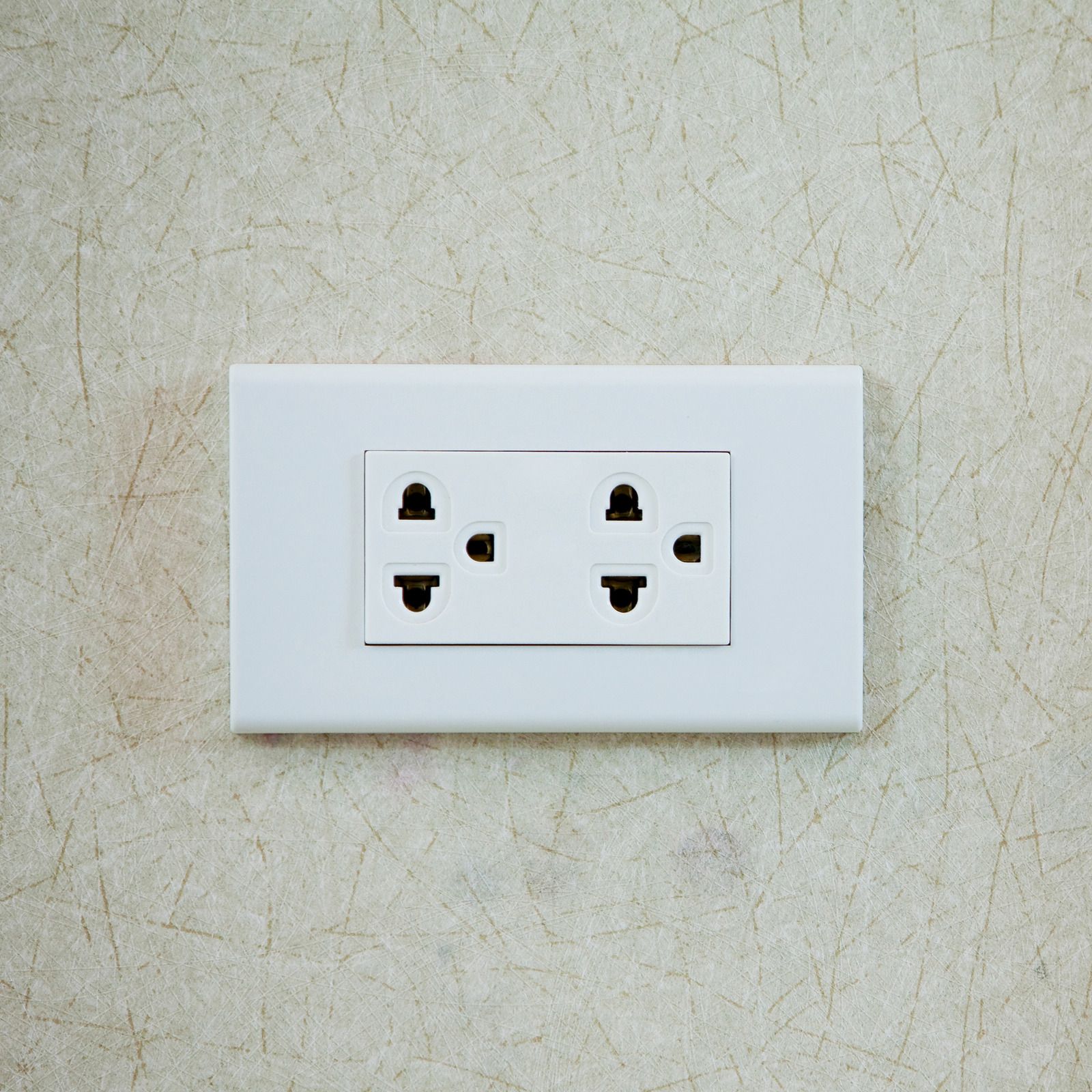
You reach behind the couch to unplug the lamp and the outlet plate feels warm. Or you notice the plastic around the plug slots has gone a little brown, like it's been scorched from the inside. Most people pause for a second, shrug, and keep moving. The lamp still works. The phone charger still charges. Nothing sparked, nothing smoked, so it can't be that bad, right?
That instinct to wait it out is exactly how small electrical problems turn into expensive, dangerous ones. A warm or discolored outlet isn't cosmetic. It's a receptacle telling you, in the only language it has, that something behind the wall isn't handling electricity the way it's supposed to.
Quick Answer: Warm or Discolored Outlets Mean Heat Where There Shouldn't Be Any
A standard outlet should stay close to room temperature no matter what's plugged into it. Warmth, browning, or melted plastic around the slots almost always points to resistance building up somewhere in the connection, whether that's a loose wire terminal, an overloaded circuit, or aging wiring losing its grip. Unplug what's connected, avoid using that outlet, and have a licensed electrician check it before it gets used again. This is not a wait-and-see situation.
Why an Outlet Gets Hot in the First Place
Electricity flows through your home's wiring with very little resistance when everything is connected the way it should be. Copper conductors, tight screw terminals, and properly sized wire keep current moving smoothly. Heat only builds up where that smooth path gets interrupted.
Picture squeezing a garden hose. Water still comes out the end, but it has to fight through a narrower opening, and that friction generates pressure. Electrical resistance works the same way. When a connection loosens, corrodes, or gets pinched, the electrons have to push harder to get through, and that extra effort shows up as heat. Over time, that heat degrades the plastic housing around the outlet, discolors the faceplate, and can eventually ignite nearby insulation or wood framing.
That's the short version of why a warm outlet matters. The longer version depends on what's actually causing the resistance behind your particular wall. And it's rarely just one thing.
The Usual Suspects Behind a Warm or Discolored Outlet
Loose Connections at the Terminal
Screws holding wires to an outlet can back out slightly over years of vibration, temperature swings, and the outlet simply being used. A loose screw means less metal-to-metal contact, which means more resistance, which means more heat every time you plug something in. This is one of the most common causes electricians find once they pull an outlet out of the wall.
Backstabbed Wiring
Many outlets have small push-in holes on the back where wires can be shoved in instead of wrapped around a screw. It's faster to install, which is why it shows up so often in production-built homes, but the spring clip holding that wire rarely grips as securely as a properly torqued screw. Given enough time and enough amperage running through it, a backstabbed connection loosens and starts generating heat right at the point where the wire meets the outlet.
An Overloaded Circuit
Space heaters, window units, hair dryers, and kitchen appliances all pull a lot of current. Plug two or three of those into outlets on the same circuit, especially through a power strip, and you can push that circuit past what it's designed to carry. The outlet itself might be fine, but the sustained draw heats up the wiring and the receptacle along with it.
Aging or Damaged Wire Insulation
Wire insulation breaks down with age, heat exposure, and rodent activity in attics and crawlspaces. Once insulation cracks or crumbles, connections underneath are more prone to arcing and corrosion, both of which raise resistance and generate heat right at the outlet.
A Faulty Appliance or Cord
Sometimes the outlet is innocent and the problem is what's plugged into it. A frayed cord, a failing charger, or a device with an internal short can dump heat straight into the receptacle it's connected to. If the outlet cools down once you unplug the device, that's a strong clue the appliance is the culprit rather than the wiring itself, though the outlet should still be checked.
Tip: Before you assume the worst, unplug everything from that outlet and feel it again after a few minutes. If it's still warm with nothing connected, the problem is in the wiring or the outlet itself, not whatever you had plugged in, and that points you and your electrician toward the right fix faster.
Why This Shows Up So Often in Northwest Arkansas Homes
Between Siloam Springs, Bentonville, Rogers, and the rest of the corridor, this region has been building fast for two decades. That growth cuts both ways when it comes to outlets running warm.
On one end, you've got older farmhouses and homes built decades ago around Gentry, Cave Springs, and the outskirts of Fayetteville that were never wired for the number of devices, chargers, and appliances a modern household runs at once. Circuits designed for a handful of lamps and a radio now carry televisions, routers, space heaters, and kitchen gadgets, all pulling from outlets that were never upgraded to match.
On the other end, the newer subdivisions that went up quickly during the area's building boom sometimes have outlets installed fast, with backstabbed connections and screw terminals that weren't torqued as tightly as they should have been. New doesn't automatically mean safe when speed was part of the build.
Add in Northwest Arkansas summers, where attic and wall cavity temperatures climb well above the surrounding air, and any connection that's already a little loose has even less margin before it starts generating noticeable heat. Storm season brings its own stress too, with power surges and voltage fluctuations that put extra strain on connections that are already compromised.
What Discoloration Specifically Tells You
Warmth is one warning sign. Discoloration is a step further down the road, because it means heat has already been happening long enough to change the outlet's appearance.
Browning or yellowing around the slots usually means low-level arcing or sustained heat over weeks or months. A darker, almost black scorch mark is a sign of more significant arcing or a connection that got hot enough to start damaging the plastic housing. If you see the faceplate actually warped, bubbled, or melted in spots, that outlet has been running hot enough to soften its own housing, and it needs to come out of service immediately.
None of these signs mean the outlet is about to catch fire in the next five minutes. But they do mean the margin between normal operation and a real problem has been shrinking, sometimes for months, without anyone noticing.
Most homeowners find this stuff by accident, the way you did.
Warning: Never try to fix a discolored or warm outlet by simply replacing the faceplate or tightening the visible screws yourself while the circuit is live. The heat damage is almost always at the wire connection behind the outlet, not on the surface, and working on it without shutting off the breaker and confirming the circuit is dead first is one of the most common ways people get shocked doing what looks like a simple repair.
What to Do the Moment You Notice It
Start by unplugging anything connected to that outlet. If you know which breaker controls it, switch it off at the panel so nothing can draw current through it while you figure out next steps. Avoid using the outlet again, even for something low-draw like a phone charger, until it's been inspected.
Take a few minutes to check nearby outlets on the same circuit, since heat and resistance problems in wiring don't always stay confined to a single receptacle. If you notice a burning smell anywhere near the outlet, or hear any buzzing or crackling, treat that as more urgent and shut off power to the whole area rather than just the one outlet.
Resist the urge to look up a quick tighten-and-reinstall fix online. A warm or discolored outlet is one of the clearest signals in residential electrical work that something needs a trained set of eyes on it. Not a five-minute patch.
When a Quick Fix Isn't Actually Quick
It's tempting to think a new outlet from the hardware store solves the problem. Sometimes it does, if the internal contacts have simply worn out from years of plugs being pushed in and pulled out. But swapping the outlet without addressing what's behind it, whether that's a loose terminal, an overloaded circuit, or aging wire insulation, just resets the clock on the same problem.
An electrician troubleshooting a warm or discolored outlet checks more than the outlet itself. That includes the wire connections at the box, the condition of the insulation, what else shares that circuit, and whether the breaker protecting it is sized correctly for the load it's carrying. That fuller picture is the difference between a fix that lasts and one that just buys a few more months before the same warmth shows up again.
Why an Outlet Gets Hot in the First Place
Electricity flows through your home's wiring with very little resistance when everything is connected the way it should be. Copper conductors, tight screw terminals, and properly sized wire keep current moving smoothly. Heat only builds up where that smooth path gets interrupted.
Picture squeezing a garden hose. Water still comes out the end, but it has to fight through a narrower opening, and that friction generates pressure. Electrical resistance works the same way. When a connection loosens, corrodes, or gets pinched, the electrons have to push harder to get through, and that extra effort shows up as heat. Over time, that heat degrades the plastic housing around the outlet, discolors the faceplate, and can eventually ignite nearby insulation or wood framing.
That's the short version of why a warm outlet matters. The longer version depends on what's actually causing the resistance behind your particular wall. And it's rarely just one thing.
Between Siloam Springs, Bentonville, Rogers, and the rest of the corridor, this region has been building fast for two decades. That growth cuts both ways when it comes to outlets running warm.
On one end, you've got older farmhouses and homes built decades ago around Gentry, Cave Springs, and the outskirts of Fayetteville that were never wired for the number of devices, chargers, and appliances a modern household runs at once. Circuits designed for a handful of lamps and a radio now carry televisions, routers, space heaters, and kitchen gadgets, all pulling from outlets that were never upgraded to match.
On the other end, the newer subdivisions that went up quickly during the area's building boom sometimes have outlets installed fast, with backstabbed connections and screw terminals that weren't torqued as tightly as they should have been. New doesn't automatically mean safe when speed was part of the build.
Add in Northwest Arkansas summers, where attic and wall cavity temperatures climb well above the surrounding air, and any connection that's already a little loose has even less margin before it starts generating noticeable heat. Storm season brings its own stress too, with power surges and voltage fluctuations that put extra strain on connections that are already compromised.
Why This Shows Up So Often in Northwest Arkansas Homes
This is paragraph text. Click it or hit the Manage Text button to change the font, color, size, format, and more. To set up site-wide paragraph and title styles, go to Site Theme.
Frequently Asked Questions
Is a slightly warm outlet always dangerous, or can that be normal?
Dimmer switches and smart outlets may feel slightly warm because of internal electronics. Standard outlets should remain near room temperature, so noticeable warmth should be checked rather than ignored completely.
Can a warm outlet fix itself if I just stop using it for a while?
No. Stopping use may temporarily remove the warmth, but loose connections, corrosion, or circuit overloads remain. Once electricity flows again, the same underlying resistance and heating problem can return.
How can I tell if the problem is the outlet itself or the circuit it's on?
Check nearby outlets on the same circuit. Multiple warm outlets may indicate a broader circuit problem, while one warm receptacle often suggests a loose connection or damage localized at that outlet.
Does a GFCI or AFCI outlet reduce the risk of this happening?
GFCI and AFCI protection helps detect ground faults or dangerous arcing, but neither prevents loose connections or circuit overloads. Protected outlets can still become warm when underlying electrical problems develop.
Should I be more worried if this outlet is in the kitchen or bathroom versus a bedroom?
Kitchen and bathroom outlets often handle heavier electrical loads and moisture exposure, increasing concern when warmth appears. However, any standard outlet that becomes noticeably warm deserves prompt attention regardless of location.
What's the difference between an outlet that's warm because of what's plugged into it and one that's warm on its own?
Unplug connected devices and wait several minutes. If warmth disappears, the device may be responsible. If the outlet remains warm, its wiring or internal connections may be generating excessive heat.
A Safer Home Starts With Early Attention
A warm or discolored outlet is easy to overlook when everything still seems to work, but the heat is evidence that the electrical connection is no longer operating normally. Loose terminals, damaged wiring, overloaded circuits, and worn receptacles can all create resistance that gradually worsens. Recognizing these signs early helps prevent further damage inside the wall and protects surrounding wiring, insulation, and building materials from prolonged heat exposure that could eventually create a more serious electrical hazard.
With over 7
years of experience, Next Electric, LLC
understands the
electrical issues
commonly found in homes throughout Siloam Springs, AR. Careful troubleshooting can determine whether unusual outlet warmth comes from the receptacle, connected wiring, circuit load, or another hidden condition. Addressing the actual source instead of covering visible discoloration provides a more dependable solution. When outlets remain cool, connections stay secure, and circuits operate within their intended capacity, the entire electrical system can function more safely and reliably for years ahead.